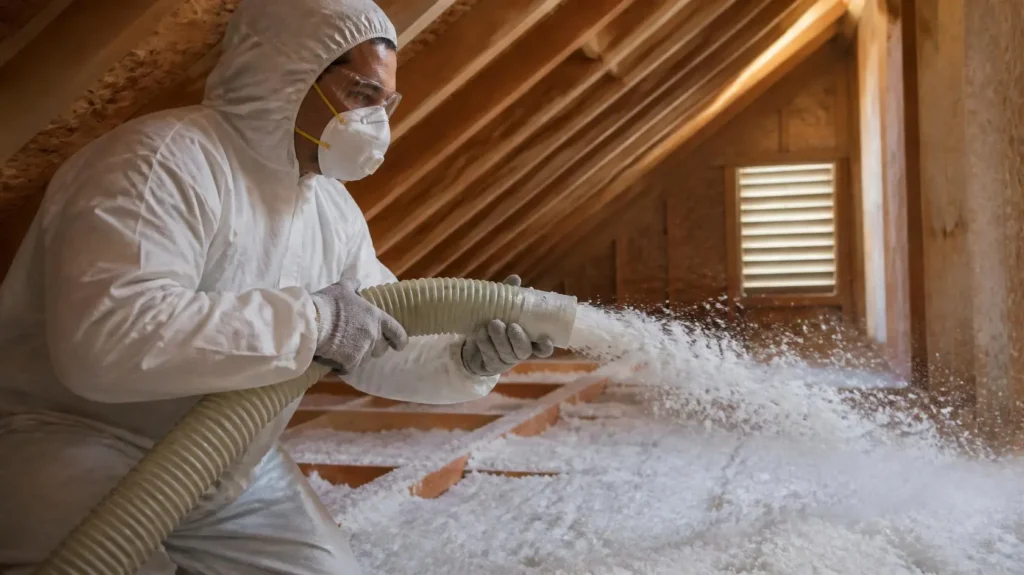
Insulating an attic costs $1 to $3 per square foot for blown-in or batt insulation, and $2.20 to $6.00 per square foot for spray foam. Most homeowners pay $1,500 to $3,500 for a standard attic, with an average near $2,500. The final price depends on 4 main things: attic size, insulation type, the R-value your climate zone needs, and whether old insulation has to come out first.
This guide breaks down 2026 attic insulation prices by material, attic size, and R-value. It also covers the costs most estimates leave out, such as insulation removal, air sealing, and cleanup after rats or mice.
What Is the Average Cost to Insulate an Attic?
The average cost to insulate an attic is $1,500 to $3,500, or about $1 to $3 per square foot installed. That range covers adding blown-in cellulose, blown-in fiberglass, or fiberglass batts over an open, accessible attic floor.
Prices climb when the job needs more than a simple top-up:
- Removal jobs: Taking out old insulation adds $1 to $2 per square foot, or roughly $900 on an average job.
- Spray foam jobs: Open-cell and closed-cell foam at the roofline run $2.20 to $6.00 per square foot.
- Hard-access or deep-fill jobs: Tight attics, steep roof pitches, and deep R-value targets push installed prices as high as $7.50 per square foot.
- Contaminated attics: Rodent, mold, or asbestos cleanup can push the total to $3,500 to $8,000 or more for a 1,500-square-foot attic.
A blown-in top-up in an open attic usually takes a few hours with a crew of 2. A full removal, sanitizing, and reinsulation job takes 3 to 7 days.
How Much Does Attic Insulation Cost by Type?
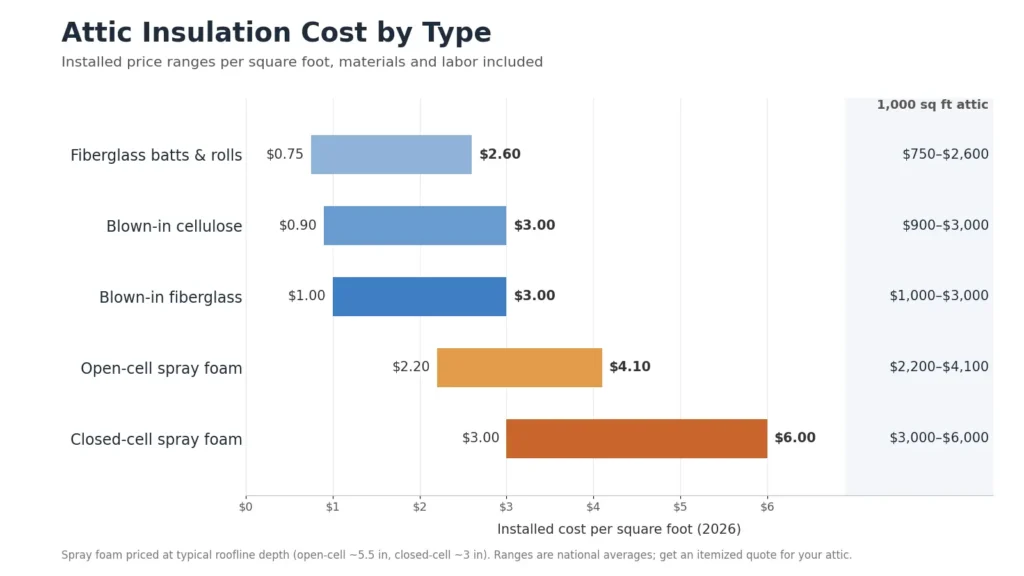
Attic insulation costs $0.75 to $3.00 per square foot for batts and blown-in materials and $2.20 to $6.00 per square foot for spray foam. Material choice is the biggest price lever, with about a 6x spread between the cheapest and most expensive options.
| Insulation Type | Installed Cost per Sq Ft | Cost for 1,000 Sq Ft Attic | R-Value per Inch | Best For |
|---|---|---|---|---|
| Fiberglass batts and rolls | $0.75 to $2.60 | $750 to $2,600 | R-2.9 to R-3.8 | Open attics with standard joist spacing |
| Blown-in cellulose | $0.90 to $3.00 | $900 to $3,000 | About R-3.5 to R-3.8 | Topping up existing insulation, filling gaps |
| Blown-in fiberglass | $1.00 to $3.00 | $1,000 to $3,000 | R-2.9 to R-3.8 | Moisture-prone or odd-shaped attics |
| Open-cell spray foam (about 5.5 in) | $2.20 to $4.10 | $2,200 to $4,100 | About R-3.5 | Air sealing vented attic floors or rooflines |
| Closed-cell spray foam (about 3 in) | $3.00 to $6.00 | $3,000 to $6,000 | About R-6.5 | Unvented attics and roof decks |
Blown-In Cellulose
Blown-in cellulose costs $0.90 to $3.00 per square foot installed. Cellulose is made from recycled paper treated with borate, which adds fire resistance and deters insects. It packs densely around wiring, pipes, and ceiling joists. Cellulose is sensitive to water, though: once its moisture content passes 20%, it can lose up to 20% of its R-value.
Blown-In Fiberglass
Blown-in fiberglass costs $1.00 to $3.00 per square foot installed. Loose-fill fiberglass resists moisture and mold better than cellulose, but it needs more depth to reach the same R-value. Reaching R-49 takes about 14 to 16 inches of blown fiberglass, compared with 13 to 14 inches of cellulose.
Fiberglass Batts and Rolls
Fiberglass batts and rolls cost $0.75 to $2.60 per square foot installed. Batts are pre-cut blankets that fit between joists, which makes them the most DIY-friendly option. They leave gaps around obstacles like vents, junction boxes, and recessed lights, so they perform best in open, uncluttered attics.
Open-Cell Spray Foam
Open-cell spray foam costs $0.40 to $0.75 per board foot, or about $2.20 to $4.10 per square foot at a typical 5.5-inch roofline depth. A board foot equals 1 square foot at 1 inch thick, so always confirm the thickness on any foam quote. Some open-cell installations also need a separate vapor barrier.
Closed-Cell Spray Foam
Closed-cell spray foam costs $1.00 to $2.00 per board foot, or about $3.00 to $6.00 per square foot at a 3-inch depth. It delivers the highest R-value per inch, about R-6.5, and forms an air, moisture, and vapor barrier in one layer. Closed-cell foam costs 2 to 3 times more than cellulose.
Radiant Barriers
Radiant barriers are reflective foil sheets or spray-on coatings that bounce heat away from the attic. They work as a supplement to insulation, not a replacement, and they are most useful in hot climates. Radiant barriers are priced separately from insulation, so ask for them as their own line item.
How Much Does It Cost to Insulate an Attic by Size?
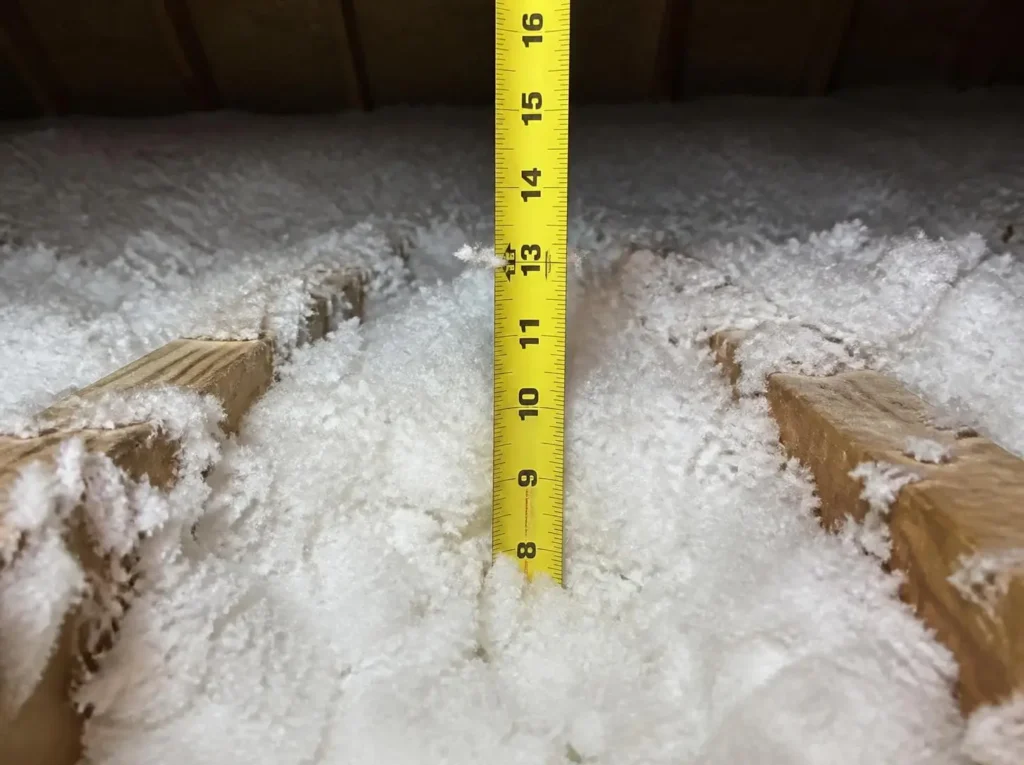
A 1,000-square-foot attic costs $750 to $3,000 to insulate with batts or blown-in material, and $2,200 to $6,000 with spray foam. Cost scales almost directly with square footage, so doubling the attic area roughly doubles the price.
| Attic Size | Fiberglass Batts | Blown-In (Cellulose or Fiberglass) | Open-Cell Spray Foam | Closed-Cell Spray Foam |
|---|---|---|---|---|
| 500 sq ft | $375 to $1,300 | $500 to $1,500 | $1,100 to $2,050 | $1,500 to $3,000 |
| 1,000 sq ft | $750 to $2,600 | $1,000 to $3,000 | $2,200 to $4,100 | $3,000 to $6,000 |
| 1,500 sq ft | $1,125 to $3,900 | $1,500 to $4,500 | $3,300 to $6,150 | $4,500 to $9,000 |
| 2,000 sq ft | $1,500 to $5,200 | $2,000 to $6,000 | $4,400 to $8,200 | $6,000 to $12,000 |
Small attics often cost more per square foot than this table shows. Many installers charge a minimum labor fee, usually tied to 2 or more hours of crew time, so a 400-square-foot job rarely costs less than a few hundred dollars.
How to Measure Your Attic for Insulation
To measure your attic, multiply its length by its width to get the square footage. Your home’s footprint works as a shortcut if the attic runs over the whole house, including any attached garage.
For spray foam or batts installed along the roofline, multiply the floor area by a pitch factor of 1.1 to 1.5. Steeper roofs use the higher number because the sloped surface is larger than the flat floor below it.
What R-Value Does Your Attic Need?
Most attics need R-38 to R-60, depending on climate zone and how much insulation is already there. R-value measures how well a material resists heat flow, and a higher number means better performance. Higher R-value targets cost more because they need more material depth.
| Climate Zone | Uninsulated Attic | Attic With 3 to 4 Inches Already |
|---|---|---|
| Zone 1 | R-30 | R-25 |
| Zones 2 and 3 | R-49 | R-38 |
| Zones 4A and 4B | R-60 | R-49 |
| Zones 4C, 5, and 6 | R-60 | R-49 |
| Zones 7 and 8 | R-60 | R-49 |
Source: ENERGY STAR Recommended Home Insulation R-Values, based on the 2021 International Energy Conservation Code (IECC).
Here is how R-value converts to insulation depth for loose-fill materials:
- R-38: About 12 to 13 inches of blown-in fiberglass.
- R-49: About 14 to 16 inches of blown-in fiberglass, or 13 to 14 inches of cellulose.
- R-60: About 17 to 22 inches of blown-in fiberglass, or 16 to 18 inches of cellulose.
A quick check tells you if your attic is under-insulated. If you can see the tops of the ceiling joists, the insulation is too thin. Older insulation also settles over time: an 8-inch layer installed in the 1990s can perform like 4 to 5 inches today.
Attic Insulation Requirements in San Diego
San Diego homes follow California’s Title 24 Energy Code, which sets attic insulation minimums by California climate zone. The 2025 Energy Code applies to permits filed on or after January 1, 2026.
- Climate Zone 7 (coast, the city of San Diego, most inland valleys): R-38 minimum attic insulation.
- Climate Zone 10 (hotter inland areas like El Cajon, Santee, and eastern San Diego County): R-49 minimum attic insulation.
Many older San Diego homes still have R-11 to R-19 in the attic, well below today’s code. A home built 20 or more years ago almost always falls short of current Title 24 levels. Confirm your exact climate zone with your city or county building department, since zone lines follow addresses, not neighborhoods.
What Factors Affect the Cost of Attic Insulation?
The 8 factors that affect attic insulation cost are attic size, insulation type, target R-value, attic access, existing insulation condition, air sealing needs, contamination, and local labor rates.
- Attic size: More square footage means more material and more labor hours.
- Insulation type: Spray foam costs 2 to 3 times more than cellulose or fiberglass for the same area.
- Target R-value: Reaching R-49 or R-60 takes deeper fill, which adds material cost.
- Attic access: Tight crawl spaces, low clearance, and steep pitches add up to $1 per square foot in hard-to-reach sections.
- Existing insulation: Clean, dry insulation can stay in place, while wet, moldy, or soiled insulation must come out first.
- Air sealing: Gaps around top plates, duct chases, and light fixtures need sealing before new insulation goes in.
- Contamination: Rodent droppings, mold, and asbestos require protective gear, special equipment, and controlled disposal.
- Labor and oversight: A general contractor overseeing the job adds 13% to 22% for overhead and markup.
What Extra Costs Should You Plan For?
The extra costs to plan for are insulation removal, air sealing, vent baffles, contamination cleanup, hazardous material testing, and permits. Many basic estimates leave these out, so ask for each one as a separate line item.
| Add-On Service | Typical Cost |
|---|---|
| Old insulation removal (clean, dry) | $1 to $2 per sq ft, or $1,600 to $3,600 for a 1,600 to 1,800 sq ft attic |
| Air sealing the attic floor | $350 to $3,000 |
| Attic sanitizing and decontamination | $500 to $1,500 for most homes |
| Mold removal and sanitizing | $1,500 to $6,000 |
| Asbestos abatement (vermiculite insulation) | $10 to $25 per sq ft |
| Structural repairs (framing, sheathing, vapor barrier) | $300 to $2,000+ |
| Sanitation job minimum (many contractors) | $1,500 to $3,000 |
Basic estimates also exclude sales tax on materials, permit and inspection fees, and any HVAC, electrical, or framing repairs. If your attic has gray-brown, pebble-like vermiculite insulation, test it for asbestos before anyone disturbs it. Homeowners with Zonolite vermiculite can apply to the Zonolite Attic Insulation (ZAI) Trust for up to 55% reimbursement on removal and replacement.
How Much Does It Cost to Replace Rodent-Contaminated Attic Insulation?
Replacing rodent-contaminated attic insulation costs $3,500 to $8,000 for a typical 1,500-square-foot attic. That total covers removing soiled insulation, sanitizing the attic, sealing entry points, and installing new insulation. A clean removal and a contaminated removal can differ by 3 to 5 times for the same square footage.
Rats, mice, and squirrels flatten insulation with nests and soak it with urine and droppings. Soiled insulation loses R-value, holds odor, and draws more rodents back to the same spot. Adding new insulation on top of it only buries the problem.
| Contamination Level | What It Looks Like | Removal Cost per Sq Ft |
|---|---|---|
| Light | Droppings in 1 section, short-term activity | $1.20 to $2.16 |
| Moderate | Droppings, trails, and nests across most of the attic | $1.80 to $3.00 |
| Heavy | Long-term nesting, saturated insulation, raccoon latrines | $3.00 to $5.40 |
Sample Estimate: 1,200 Sq Ft Attic With Moderate Rodent Damage
This sample shows how a rodent attic restoration adds up. It is a planning estimate, not a quote.
| Line Item | Estimated Cost |
|---|---|
| Contaminated insulation removal (1,200 sq ft at $1.80 to $3.00) | $2,160 to $3,600 |
| Sanitizing and deodorizing | $500 to $1,500 |
| New blown-in insulation to R-38 (1,200 sq ft at $1.00 to $3.00) | $1,200 to $3,600 |
| Estimated total before repairs | $3,860 to $8,700 |
| Structural repairs, if needed | $300 to $2,000+ |
What the Rodent Attic Restoration Process Includes
To restore an attic after rodents, professionals follow these 6 steps:
- Inspect the attic: Map droppings, nests, damaged wiring, and every entry point.
- Seal entry points: Close gaps, vents, and roof openings so rodents cannot return.
- Remove contaminated insulation: Vacuum soiled material with HEPA-filtered equipment into sealed bags.
- Sanitize surfaces: Treat joists, sheathing, and drywall with EPA-registered disinfectant and deodorizer.
- Repair damage: Replace chewed wiring, torn ductwork, and broken vapor barriers.
- Install new insulation: Blow in fresh insulation to the R-value your climate zone requires.
Skipping step 2 is the most expensive mistake. New insulation over unsealed entry points gives rodents fresh nesting material, and the job starts over.
Rodent waste is also a health risk. Deer mouse droppings can carry hantavirus, which spreads when dried waste turns into airborne dust. Dry sweeping or shop-vacuuming a contaminated attic stirs up those particles. Patriot Attic Recovery handles attic cleanup and rodent removal with protective gear, HEPA vacuums, and sealed disposal, then replaces the insulation once the attic is clean and sealed. See the full list of attic cleanup services for sanitizing, rodent-proofing, and insulation replacement.
Can You Insulate an Attic Yourself to Save Money?
Yes, DIY blown-in attic insulation costs $0.35 to $1.50 per square foot, or about $500 to $1,200 for an average attic. That is roughly half the price of professional installation, because you pay only for material and equipment.
| Factor | DIY Installation | Professional Installation |
|---|---|---|
| Blown-in cost per sq ft | $0.35 to $1.50 | $0.90 to $3.00 |
| Typical total | $500 to $1,200 | $1,500 to $3,500 |
| Crew needed | 2 people (1 feeds the blower, 1 directs the hose) | Trained crew with commercial equipment |
| Removal equipment | Vacuum rental at $200 to $350 per day | Included |
| Air sealing and baffles | You handle it | Usually included or quoted |
| Contaminated attics | Not recommended | Required |
DIY works best for a clean, dry, open attic that only needs a top-up. Before you start, seal air leaks, box out recessed light fixtures, and keep soffit vents clear with baffles. Hire a professional if the attic has rodent droppings, mold, water damage, or vermiculite insulation, since those jobs carry real health risks.
Is Attic Insulation Worth the Cost?
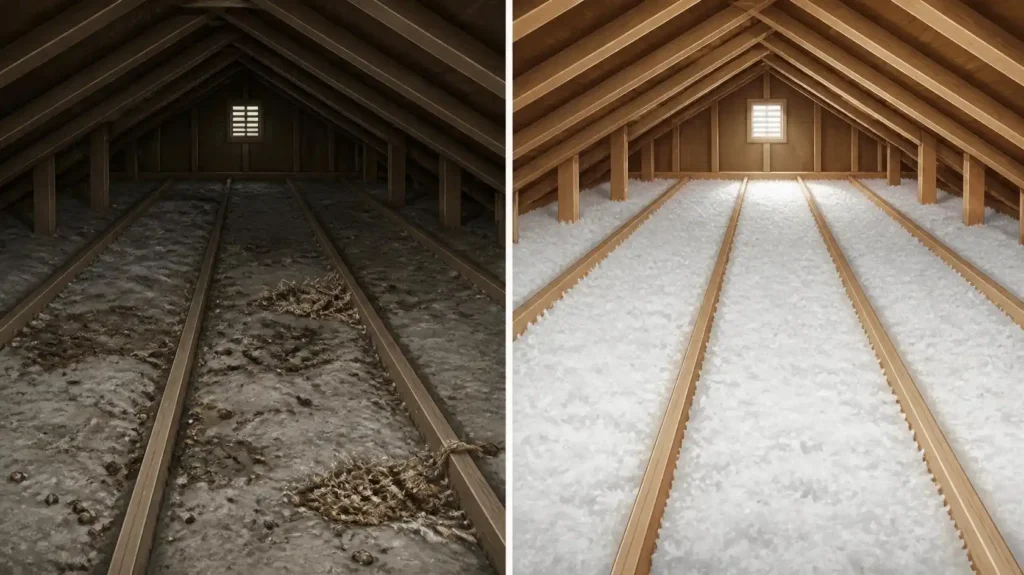
Yes, attic insulation is worth the cost for most homes. ENERGY STAR estimates that air sealing and insulating save homeowners an average of 15% on heating and cooling costs, or about 11% on total energy costs. The attic accounts for up to 25% of the heat a home gains in summer and loses in winter, more than walls or windows.
The payoff goes beyond utility bills:
- Comfort: Rooms under the attic stay closer to the thermostat setting.
- HVAC life: Heating and cooling systems cycle less and wear out more slowly.
- Air quality: Air sealing blocks attic dust, fibers, and odors from entering living spaces.
- Home value: Code-level insulation helps during home inspections and resale.
San Diego homeowners see strong returns on cooling costs, since the region has some of the highest electricity rates in the country.
Are There Tax Credits or Rebates for Attic Insulation in 2026?
No, the federal tax credit for attic insulation ended on December 31, 2025. The Section 25C Energy Efficient Home Improvement Credit covered 30% of insulation material costs, up to $1,200 per year. The One Big Beautiful Bill Act, signed July 4, 2025, moved its end date up from 2032. Insulation installed in 2026 or later does not qualify for any federal tax credit.
Local programs still help lower the cost:
- SDG&E Energy Savings Assistance Program: Income-qualified renters and homeowners can get attic insulation and other upgrades at no cost.
- SDG&E whole-home upgrade programs: Past versions paid $1,000 to $3,000 and required attic insulation above R-44 plus attic air sealing. Confirm current offers with SDG&E before you commit.
- Zonolite Attic Insulation Trust: Homes with Zonolite vermiculite can qualify for up to 55% reimbursement on removal and replacement.
Utility programs change often, and most require a participating contractor. Check eligibility before work begins, since rebates are rarely paid after the fact.
How Can You Lower Your Attic Insulation Cost?
To lower your attic insulation cost, follow these 5 tips:
- Top up existing insulation: Add a new layer over clean, dry insulation instead of removing it.
- Choose loose-fill material: Pick blown-in cellulose or fiberglass over spray foam for vented attics.
- Bundle the work: Combine insulation with a reroof, which saves $500 to $1,000 in labor on San Diego jobs.
- Seal air leaks first: Close gaps so a lower R-value performs closer to its rating.
- Compare itemized quotes: Request separate prices for removal, cleanup, disposal, air sealing, and new insulation.
Frequently Asked Questions
How much does it cost to insulate a 1,500-square-foot attic?
Insulating a 1,500-square-foot attic costs $1,125 to $4,500 with batts or blown-in insulation, and $3,300 to $9,000 with spray foam. Add $1,500 to $3,000 if old insulation needs removal first.
Can you put new insulation over old insulation?
Yes, new insulation can go over old insulation if the old layer is clean, dry, and free of rodent waste or mold. Wet, moldy, or contaminated insulation must come out first, or it keeps losing R-value and holding odors.
Is blown-in insulation cheaper than batts?
No, fiberglass batts are slightly cheaper at $0.75 to $2.60 per square foot, compared with $0.90 to $3.00 for blown-in. Blown-in insulation fills gaps around joists and obstructions better, so it often performs better for the price in existing attics.
How long does it take to insulate an attic?
A blown-in attic insulation job takes a few hours, often about 4, for a crew of 2. A full job with removal, sanitizing, and reinsulation takes 3 to 7 days.
When should attic insulation be replaced?
Attic insulation needs replacement after rodent activity, mold growth, water damage, or fire damage. Replacement also makes sense when insulation has settled or compressed well below the R-value your climate zone requires.
What is the minimum attic insulation in San Diego?
The minimum attic insulation in San Diego is R-38 in Climate Zone 7 and R-49 in Climate Zone 10 under California’s 2025 Title 24 Energy Code. Coastal and central areas fall in Zone 7, while hotter inland areas fall in Zone 10.
Get an Honest Attic Insulation Quote in San Diego
Attic insulation cost comes down to 3 questions: how big the attic is, what material fits it, and what has to come out first. If rats, mice, or other wildlife have been in your attic, the insulation almost always needs removal, sanitizing, and replacement, not just a top-up.
Patriot Attic Recovery is a locally owned, family-run attic restoration team serving San Diego County. We inspect your attic for free, give honest, itemized pricing, and back our work with a satisfaction guarantee and no-cost follow-ups if rodents return. Contact us to schedule your free attic inspection and get a clear, line-by-line quote.