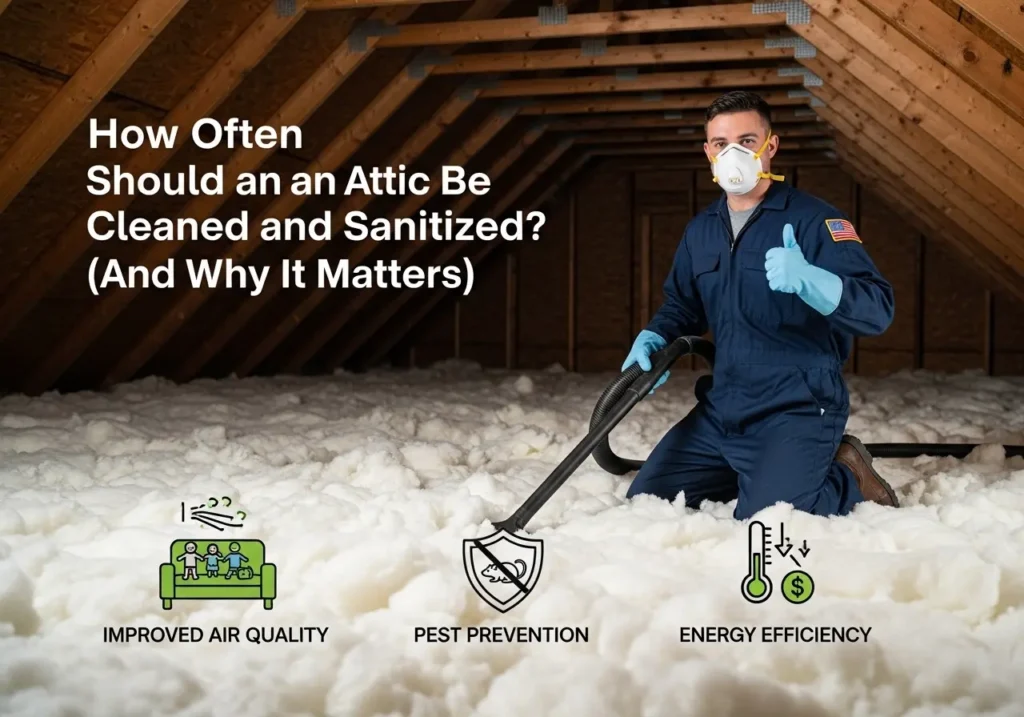
Most homeowners rarely think about their attic. It’s out of sight, so it’s often out of mind. However, the attic plays a critical role in the health, safety, and energy efficiency of your home. Over time, dust, insulation debris, pest droppings, mold, and contaminants can accumulate in this space. Without regular maintenance, these issues can impact indoor air quality and even lead to structural problems.
So how often should an attic be cleaned and sanitized? In general, experts recommend a professional attic cleaning and sanitization every 3–5 years, though some homes may need it more frequently depending on conditions. Understanding when and why attic cleaning is necessary can help protect both your property and your health.
Why Attic Cleaning and Sanitizing Is Important
Many homeowners assume their attic is simply a storage space or a buffer between the roof and the home. In reality, it directly affects several important aspects of your living environment.
1. Improves Indoor Air Quality
Up to 40–50% of the air inside your home can come from the attic through air circulation. When the attic contains dust, rodent droppings, mold spores, or contaminated insulation, these particles can circulate throughout the home.
- Regular attic cleaning removes:
- Dust and debris
- Rodent droppings and urine
- Bacteria and allergens
- Mold spores
- Pest nesting materials
Sanitizing afterward helps eliminate bacteria and odors that can otherwise spread through your ventilation system.
2. Prevents Pest Infestations
Attics are one of the most common places for pests to hide and nest. Rodents, raccoons, squirrels, and insects are attracted to attics because they provide warmth, shelter, and quiet.
- Signs of attic pests include:
- Scratching sounds in ceilings or walls
- Droppings or urine stains
- Chewed insulation or wiring
- Nesting materials
- Unusual odors
If pests have been present, a full attic clean and sanitation should be performed immediately after removal to eliminate bacteria and contamination.
3. Protects Insulation Efficiency
Insulation plays a major role in maintaining comfortable temperatures in your home. When insulation becomes contaminated by dust, moisture, or animal waste, it loses its ability to properly regulate temperature.
- Dirty or damaged insulation can lead to:
- Higher heating and cooling costs
- Uneven indoor temperatures
- Reduced energy efficiency
During attic cleaning, insulation is inspected and damaged areas can be removed or replaced, helping restore proper insulation performance.
4. Reduces Mold and Moisture Problems
Attics can be vulnerable to moisture buildup due to roof leaks, poor ventilation, or humid air. Moisture combined with organic materials creates the perfect environment for mold growth.
- Mold in an attic can:
- Spread spores through the HVAC system
- Damage wood structures
- Create musty odors throughout the home
- Cause respiratory irritation
Professional attic sanitizing treatments can help eliminate mold spores and prevent future growth when combined with proper ventilation.
5. Extends the Life of Your Home
Dust accumulation, moisture damage, pest activity, and mold can gradually weaken structural components in the attic. Over time, this can impact:
- Roof decking
- Support beams
- Drywall ceilings
- Electrical wiring
Routine cleaning allows professionals to spot problems early before they become expensive repairs.
How Often Should an Attic Be Cleaned?
While the average recommendation is every 3 to 5 years, several factors can influence how frequently your attic should be cleaned and sanitized.
Every 3–5 Years (Standard Maintenance)
For most homes with no pest activity or major moisture issues, a full attic cleaning every few years is sufficient. This includes:
- Debris removal
- Dust removal
- Insulation inspection
- Sanitizing treatment
- Odor neutralization
Routine maintenance prevents buildup and keeps the attic environment healthy.
Every 1–2 Years (High-Risk Homes)
Some homes may benefit from more frequent attic maintenance, particularly if they have:
- Older insulation
- Poor attic ventilation
- Nearby trees attracting wildlife
- Previous rodent problems
- High humidity levels
Homes in areas with frequent pest activity may require cleaning closer to every one or two years.
Immediately After Pest Infestations
If rodents, raccoons, or other animals have been in the attic, cleaning should be done as soon as they are removed. Pest contamination can carry bacteria and viruses that should not remain in the home.
- Professional pest-related attic cleaning usually includes:
- Removal of contaminated insulation
- Dropping and nesting material removal
- Sanitizing and deodorizing
- Rodent-proofing entry points
This process restores the attic to a safe condition.
After Major Home Renovations
Construction projects often produce dust and debris that can settle in the attic. If your home has undergone significant renovations, attic cleaning helps remove airborne particles that may have accumulated.
Signs Your Attic Needs Cleaning
Even if you’re unsure when your attic was last serviced, certain warning signs indicate it may be time for a cleaning.
Look for these indicators:
- Strong or musty odors in the home
- Higher-than-normal energy bills
- Visible rodent droppings
- Insulation that appears flattened or dirty
- Water stains or mold spots
- Scratching or movement sounds in the ceiling
If you notice any of these issues, an attic inspection is recommended.
What Happens During a Professional Attic Cleaning?
Professional attic cleaning involves more than simply sweeping up dust. It is a detailed process designed to remove contaminants safely.
Typical steps include:
- Attic inspection – Checking insulation, ventilation, and pest activity.
- Debris removal – Removing dust, nesting materials, and droppings.
- Contaminated insulation removal – If necessary.
- Sanitizing treatment – Applying antimicrobial disinfectants.
- Odor neutralization – Eliminating lingering smells.
- Air sealing or rodent proofing – Optional preventative measures.
Because attics may contain bacteria, mold spores, and allergens, professionals use protective equipment and specialized vacuums.
DIY vs. Professional Attic Cleaning
While homeowners can perform basic attic maintenance, deep cleaning and sanitizing are usually best handled by professionals.
- Airborne bacteria
- Mold spores
- Rodent waste
- Fiberglass insulation particles
Professional services have the equipment and protective gear needed to safely remove contaminated materials and properly disinfect the space.
The Long-Term Benefits of Regular Attic Cleaning
Maintaining a clean attic provides several long-term advantages for homeowners.
- Healthier Indoor Environment
- Removing contaminants improves air quality throughout the house.
- Lower Energy Bills
- Clean, properly functioning insulation helps regulate indoor temperatures.
- Reduced Pest Risk
Regular inspections help identify entry points and nesting activity early.
Increased Home Value
A well-maintained attic signals that the home has been properly cared for.
Final Thoughts
Although the attic may not be a space you visit often, it has a major impact on the overall condition of your home. Dust, pests, mold, and contaminated insulation can quietly build up over time, affecting air quality, energy efficiency, and structural integrity.
As a general guideline, attics should be cleaned and sanitized every 3 to 5 years, with more frequent service recommended for homes with pest activity or moisture issues. Scheduling regular attic maintenance helps prevent costly repairs while keeping your living environment safe and healthy.
If your attic hasn’t been inspected or cleaned in several years, now may be the perfect time to schedule a professional evaluation and ensure your home remains clean, efficient, and protected.